

A Homeowner’s Guide to Watering Your North Texas Lawn
Proper watering is one of the most important parts of maintaining a healthy lawn in North Texas, yet also one of the most misunderstood. Homeowners often ask us, “How many minutes should I run my sprinklers?” or “How many days a week should I water?” There’s no single watering schedule that’s right for every lawn, or every time of year.
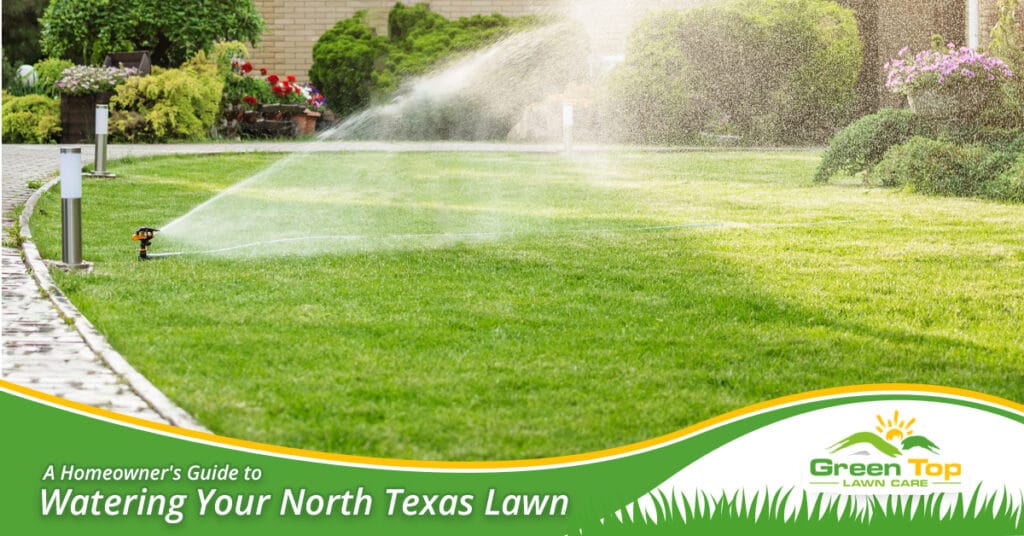
In truth, your lawn’s water needs change with the weather, temperature, rainfall, soil conditions, grass type, sun exposure, tree competition, and even the type of sprinklers watering the lawn.
This is why our approach at Green Top Lawn Care is straightforward. Watch your lawn, not just the clock or the calendar. Use this page as a practical resource to recognize signs of drought stress, identify common watering problems, and help determine how much water your North Texas lawn may need.
How Much Water Does a North Texas Lawn Need?
As a general starting point, an established North Texas lawn may need around 1 inch of water per week from rainfall and irrigation during the active growing season. But that’s a starting point, not a rule.
During periods of extreme summer heat and little or no rainfall, a lawn may require around 1.5 inches per week (or potentially more), all depending on conditions. For instance, during cooler weather or weeks with meaningful rainfall your lawn may need considerably less supplemental irrigation.
That’s why we don’t recommend dutifully applying the same amount of water every week of the year. Your lawn’s watering needs can be affected by the following.
- Temperature
- Recent rainfall
- Sun and shade
- Grass type
- Soil conditions
- Tree-root competition
- Slopes and drainage
- Sprinkler coverage
The goal is to provide enough moisture to maintain a healthy root zone without keeping the soil unnecessarily saturated.

How Often Should You Water Your Lawn?
In most situations, deeper and less frequent watering is preferable to frequent shallow watering. Short watering cycles that only wet the soil surface may encourage shallow rooting, leaving the lawn more vulnerable when North Texas temperatures climb. When you water, the goal is to get moisture several inches into the soil where the majority of the lawn’s active root system can use it.
When Is the Best Time to Water Your Lawn?
Early morning is generally the best time to water your lawn. When compared with watering during the heat of the day, morning watering reduces evaporation and allows the grass to dry as the day progresses.
Most importantly, don’t assume that watering for a certain number of minutes automatically means your lawn received enough water. Minutes measure time, not water.
Why Lawn Sprinkler Run Times Can Be Misleading
This is one of the most important things homeowners should understand about lawn watering. We frequently hear customers say, “I’m watering for 20 minutes.” Our next question is likely to ask about the type of sprinkler heads they’re using. Unfortunately, the timespan of “20 minutes” tells us very little about how much water actually reached the lawn.
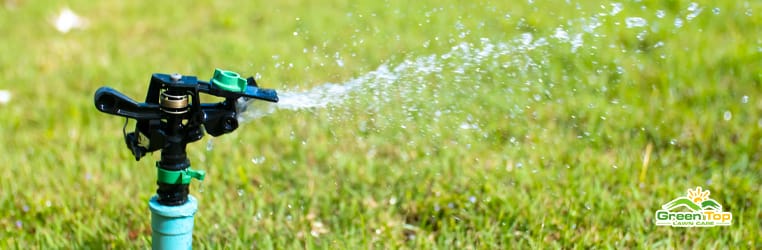
Pop-Up Spray Heads
Traditional pop-up spray heads typically release a relatively large amount of water fairly rapidly, so they require shorter run times to deliver the desired amount of water.
Rotary or Rotor Heads
Rotary or rotor-style heads generally apply water more slowly over a longer period of time. Depending on the equipment, these may need to run considerably longer than conventional spray heads to deliver a comparable amount of water.
That’s why two homeowners can both say, “I water for 20 minutes,” while their lawns actually receive very different amounts of water.
Sprinkler type, nozzle size, water pressure, spacing and coverage can all affect how much water reaches the lawn. The takeaway here is “do not judge your watering by minutes alone.” Judge it by how much water is actually reaching the root zone and how your lawn is responding.
If you believe your irrigation system needs adjustment, repair or professional evaluation, contact a licensed irrigation professional.
How Can I Tell if My Lawn Isn’t Getting Enough Water?
Your lawn will often give you warning signs before severe drought damage occurs. Look for these signs of drought stress.
Brown or Thinning Areas
Dull Green or Bluish-Gray Grass
Grass experiencing drought stress may lose its normal green color and develop a dull, gray-green or bluish appearance.
Footprints That Stay Visible
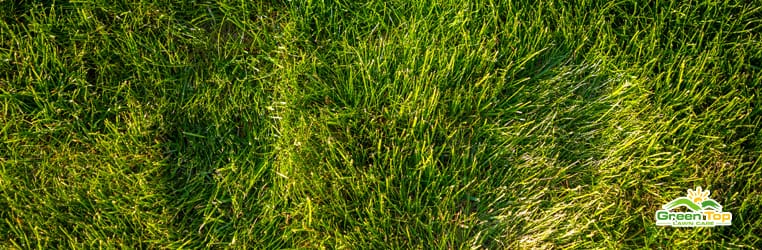
Walk across your lawn and look behind you. Healthy, hydrated grass blades generally spring back relatively quickly. If your footprints remain visible, the grass may be losing the moisture it needs to remain rigid.
Folded or Curling Grass Blades
Grass blades may begin folding or curling as the plant attempts to conserve moisture.
Hard Dry Soil
Sometimes the simplest test is one of the best. Try pushing a screwdriver several inches into the soil. If it’s very difficult to push into the ground, the soil may be too dry. For an even better comparison, perform the same test in a healthy-looking section of the lawn and then in the struggling area.
Why Is One Part of My Lawn Brown While Everything Else Looks Good?
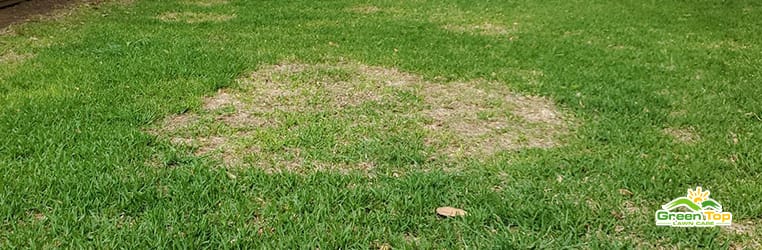
This is an extremely common question. Homeowners sometimes assume that because their sprinkler system is running, every part of the lawn must be receiving the same amount of water, but that’s not necessarily true. Some factors (like the following) can cause one section of the lawn to dry out faster than the rest.
- Uneven sprinkler coverage
- Greater sun exposure
- Heat reflected from sidewalks or driveways
- Competition from tree roots
- Sloped ground and runoff
- Differences in soil
- Compacted soil
- Previous lawn damage
- Differences in drainage
Looking at the above, it’s easy to understand that every brown area that appears does not point to the entire lawn needing more water. To determine what’s going on, compare the problem area with the healthy lawn.
First, check the soil moisture in both areas, and observe whether each area is receiving water. Look at differences in the slope of the areas, the trees, sunlight and concrete, and any other environmental conditions. Sometimes the answer becomes much clearer when you compare the struggling area directly with an area that’s performing well.
Does Rain Count Towards My Lawn’s Watering Needs?
It absolutely counts, as rainfall is part of your lawn’s total weekly water. When your lawn receives meaningful rainfall, your irrigation schedule should be adjusted accordingly.
However, don’t let an observation like “we’ve had a lot of rain this year” confuse things, because what matters to your lawn today isn’t how much rain North Texas received a month or two ago. What matters is how much moisture is currently available in the soil, and how much water your lawn has received recently. During an extended period without rain (especially during summer), the soil can dry considerably even if the year started out wet.
Think recent, not historical, and ask, “How much rain and irrigation has my lawn received over the past week?” Then look at what your lawn is telling you.
Current North Texas Watering Conditions
Water requirements in North Texas can change dramatically throughout the growing season. During periods of moderate temperatures and regular rainfall, supplemental irrigation needs may be relatively low. During extended periods of extreme heat and little or no rainfall, lawns may require considerably more supplemental water.
During prolonged triple-digit temperatures with little or no meaningful rainfall, we recommend using approximately 1½ inches of water per week from rainfall and irrigation as a starting point, then adjusting according to how your lawn responds.
Green Top’s Most Important Lawn Watering Advice
If you remember only one thing, remember this….
Watch your lawn, not just the clock or the calendar.
A sprinkler controller doesn’t know that one part of your lawn gets 8 hours of direct sunlight. It doesn’t know that a large tree is competing with the turf for moisture. It doesn’t know that it rained yesterday. And it doesn’t know that one sprinkler is failing to adequately reach a corner of your yard.
Your lawn gives you clues – learn to recognize them. Use watering recommendations as a starting point, then adjust according to weather conditions and what your lawn is telling you.
Quick Lawn Watering Checklist
If you’re concerned that your lawn isn’t receiving enough water, start here.
- Check Recent Rainfall – Focus on the past week, not how much rain we’ve had this year.
- Look for Drought Stress – Watch for dull or bluish grass, persistent footprints, folding leaves, brown areas, slow growth.
- Check the Soil – Compare soil moisture in healthy and struggling areas.
- Observe Your Sprinkler Coverage – Make sure water is actually reaching the areas you’re concerned about.
- Consider the Weather – Hot, sunny, windy conditions can increase your lawn’s water needs.
- Water Early – Early morning is generally the best time to water.
- Water Deeply – The goal is getting moisture in the root zone, not simply a wet soil surface.
- Don’t Assume Every Brown Spot Needs More Water – Disease, insects, roots, soil conditions and previous damage can produce similar symptoms.
If watering appears adequate but your lawn continues to decline, professional lawn disease treatment may be needed to address problems that look similar to drought stress.
Still Have Questions About Watering Your Lawn?
Not every brown, thin or struggling area is caused by improper watering. When your lawn appears to be receiving adequate water and an area continues to decline, another problem may be involved.


