

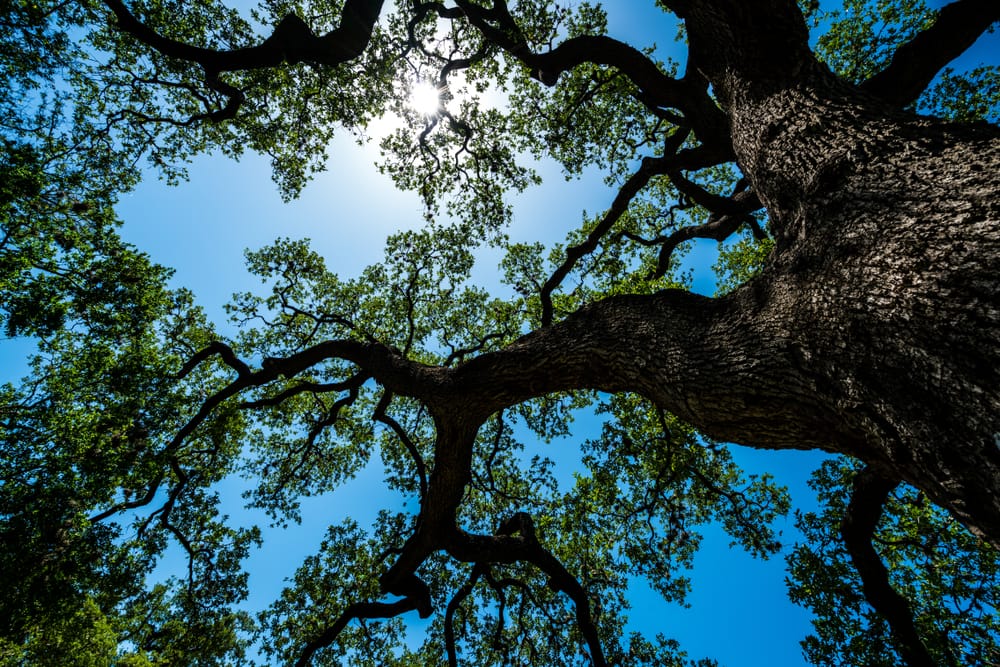
If you live in North Texas, you may very well have a live oak tree on your property. Live oaks (Quercus virginiana) are a common street tree, often planted in the grass strip between the street and sidewalk. They provide shade after a few years, especially when they’re maintained by professional lawn care services that specialize in tree care.
Live oaks are long-lived and have very few insect or disease issues. They are evergreen, keeping their green leaves year-round. They produce small acorns. Some years they will be heavy with acorns, and some years they can be light producers. Here are a few common live oak issues homeowners notice and what they mean.
Protecting Live Oaks From Gall Damage and Stress
One of the most common concerns regarding live oaks involves the galls (abnormal growths) that can form on their leaves and branches. Galls may develop due to disease, such as Agrobacterium, or as a result of tiny gall wasps.
Most inquiries concern wasp-induced galls, which occur when small wasps lay eggs in leaf tissue and sting the surface, prompting the tree to form a protective growth around the eggs. Ongoing professional tree care is beneficial to help maintain the health and appearance of live oaks affected by gall activity.
Telltale Signs of Galls on Live Oaks
The hedgehog gall wasp triggers leaf galls with orange fuzz on the undersides of leaves. The mealy oak gall wasp causes woody twig and stem galls on live oaks. These can reach 1–2 inches in size, so if you see spherical galls on twigs, they are probably from the mealy oak gall wasp. You can also see holes in the galls where the larvae escaped from the gall ball. Galls are harmless and do not require treatment, though affected foliage may drop early. Heavy populations of large galls, such as the gouty gall, may cause dieback or limb drop.
Effective Treatment Options for Galls
Insecticides that target gall-producing insects must be applied when the insects are laying eggs. But using an insecticide may harm beneficial insects that provide biological control. You can prune and discard infested parts if you like. Note that if your live oak has big knots in a limb, that is more likely to be burls. A burl is like a benign tumor on a person, and doesn’t hurt anything as far as tree growth is concerned.
Crown Gall on Live Oaks
If your live oak has a big growth at the bottom of the trunk, it could be Crown gall. These galls are growths instigated by Agrobacterium tumefaciens, a soil bacteria. A Crown gall is also like a tumor and can grow larger, but probably will not kill your tree unless growths are so big that they affect the water supply.
Bark Lice and Live Oaks
Occasionally, the tree and shrub care professionals at Green Top Lawn Care receive a call about “spider webs covering the trunk of my live oak.” This looks strange, but is nothing to worry about, as it is evidence of having bark lice. Bark lice are small, foraging insects that are actually helpful. Bark lice come in and clean the bark of mold, algae and dead tissue, then move on to another tree. So if you see webbing on your bark, think of it as a live oak bark-cleaning service.
Keep Your North Texas Live Oaks Thriving
Live oaks add welcoming beauty and shade to any Tarrant County landscape, but keeping them healthy requires proper care and maintenance. Count on Green Top Lawn Care for recommendations on your live oak trees while providing ornamental tree and shrub services. Call (817) 684-4044 and request a free tree and shrub care quote now.


