

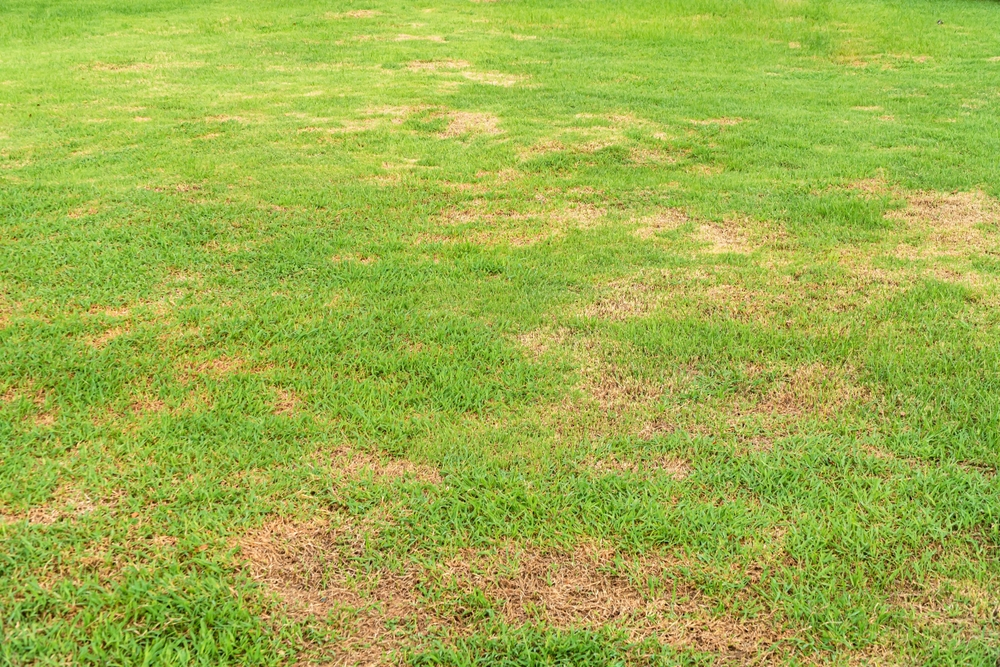
There’s nothing more frustrating than watching your lawn recover from disease only to see the same brown, yellow, or thinning patches reappear. With professional lawn disease treatment, you can keep active lawn disease under control and minimize further damage.
At Green Top Lawn Care, we’ve been helping North Texas homeowners keep their lawns healthy and looking their best for more than 15 years. We offer customized services designed to accommodate your turf’s unique needs. Because brown or thinning patches can be caused by disease, drought, pests or other lawn conditions, Green Top Lawn Care evaluates the overall condition of your turf before recommending treatment.
Top Reasons Lawn Diseases Keep Returning
Seeing the same discoloration or thinning patches in your lawn over and over again can make you wonder what you’re doing wrong. The truth, however, is that recurring lawn disease does not necessarily result from inadequate lawn care. In North Texas, environmental conditions, disease-prone grass varieties and improper irrigation are just some of the factors that can contribute to repeated outbreaks.
So, why do lawn diseases keep coming back? Let’s look at some of the top reasons.
Overlooking the Underlying Cause
Brown, sparse patches may seem to improve after treatment, but if the conditions that enabled the diseases to develop in the first place have not been resolved, they’re bound to return. In fact, overlooking the contributing factors can leave your lawn vulnerable to repeated disease outbreaks.
For instance, when your grass is consistently wet due to overwatering and poor drainage, it’s easy for fungal disease to persist. Identifying and addressing the root cause of the disease and correcting the conditions can help minimize the risk of future problems.
Delaying Lawn Disease Treatment
Discolored blades or patches of thinning grass can be early signs of a developing lawn disease. If the problem is left unchecked, the infection can spread throughout the rest of your lawn, causing more extensive damage and leaving your turf more vulnerable to recurring problems.
Treating lawn disease early can help control the issue before it has a chance to progress. Regularly assess your lawn and check for changes in color, texture or density, especially when conditions favor disease development. When unusual conditions appear, investigate before things get worse.
Unresolved Soil Issues
Healthy grass depends on healthy soil. Compacted turf can restrict root growth, while poor drainage can leave the ground excessively wet, creating the ideal conditions for certain lawn diseases. Improper fertilization can lead to nutrient imbalances that weaken the turf and leave your grass more susceptible to disease.
When soil issues persist your grass may struggle to recover from disease, leaving it vulnerable to recurring problems. Addressing soil compaction, improving drainage and providing the right nutrients can help boost turf health and prevent the risk of persistent lawn disease.
Disease-Prone Grass
Certain varieties of turf are more vulnerable to lawn-damaging diseases. For example, St. Augustine grass is prone to take-all root rot and gray leaf spot, while bermuda grass and zoysia grass are susceptible to large patch disease (also called zoysia patch). These grass varieties are popular choices in North Texas as they’re heat resistant and can tolerate drought, but they need proper care to remain healthy. If you are putting in a new lawn, look for newer varieties like TifTurf or Bandera that have been bred to resist disease.
If your lawn consists of grass varieties that are prone to disease, avoid overwatering and excessive fertilization. Maintaining healthy growing conditions may not prevent every disease outbreak, but it can reduce the risk of recurring problems.
Break the Cycle of Recurring Lawn Disease
When lawn disease is a continuous struggle, addressing the underlying cause is the key to breaking the cycle. At Green Top Lawn Care, our team of experienced professionals can help you identify the root cause and develop a targeted approach to keep disease under control. Call (817) 684-4044 or request a free lawn disease treatment quote today.


