

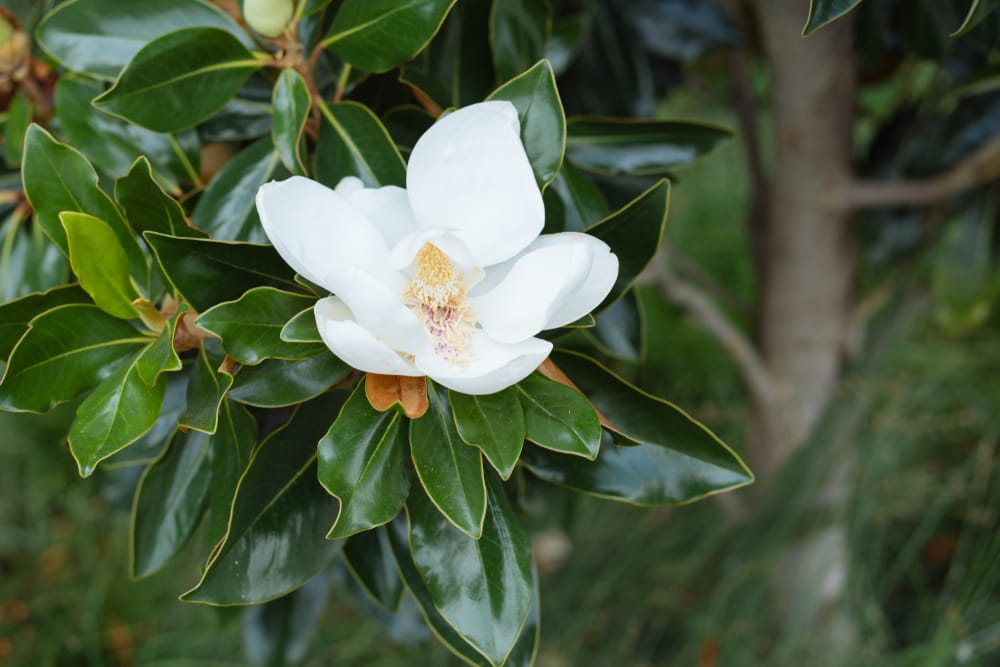
Magnolia trees are a signature feature in many North Texas landscapes, but they need the right care to stay healthy. To ensure their magnolias thrive, many homeowners rely on professional lawn care services that specialize in tree and shrub care. Whether it’s understanding the common issues these trees can face, providing the right nutrients, or performing insect and disease treatments, here’s what you need to know to keep your magnolias strong and beautiful all year long.
What You Need to Know to Maintain Healthy Magnolia Trees
Southern magnolias are planted for their beauty and evergreen foliage that provides shade year-round. While the Southern magnolia has white blossoms, there is also a deciduous magnolia that loses its leaves in the winter, and features large, usually purple or pink flowers in the spring. Also, there are some relatively new yellow blooming magnolias, but they are a rare find in this area. The magnolias that lose their leaves are usually planted for their flowers.
Common Magnolia Tree Pests and Problems
Magnolias generally have few fatal issues, though some problems may be unsightly. Magnolia bark is thin, so it’s prone to winter freeze damage and bark cracking. Both hard and soft scales often attack leaves and stems. While the scale insects are not fatal, they produce honeydew which brings black sooty mold growth to leaves. This affects the tree’s looks and unfortunately also blocks chlorophyll production.
The sapsucker is another pest that attacks magnolias. Sapsuckers are birds like woodpeckers that drill into the bark and make a line of holes in the tree. When sapsucker damage is extreme it reduces the flow of water through the tree, thus weakening it. Each hole is in effect an open wound that allows disease and insects to enter the tree.
Occasionally, leaf miners will harbor in leaves, but this usually causes only minor damage. Keeping trees and shrubs healthy year-round can help reduce stress and support overall plant health.
How to Detect and Correct Magnolia Diseases and Deficiencies
Magnolias can be affected by many diseases, but the hot, dry North Texas weather keeps most of them from becoming an issue. The main magnolia disease seen in this area is bacterial leaf spot. You will see spots on the leaves. Usually, these spots are silver inside and may have a yellow halo. Keeping them sprayed every 4–6 weeks will help keep magnolias healthy.
Iron and zinc deficiencies are two of the most common micronutrient deficiencies in magnolias in this area. Zinc is needed for blooms, while iron is needed to prevent leaf yellowing. Magnolias prefer acidic soil, and while they will grow in alkaline North Texas soils, they grow very slowly and do not get as large as they could otherwise. Magnolias are among the species that require certain micronutrients in greater amounts than other tree species.
In North Texas, it’s also recommended to perform fertilization of magnolias at least yearly, and two or three feedings would be better. Professional tree and shrub care services can help ensure magnolias receive the proper nutrients and treatments they need to stay healthy. Make sure the pH around your magnolia is optimal to allow it to absorb nutrients. When you plant a magnolia, plan to add some peat moss to the original soil you pull from the planting hole. The added peat will lower the pH and make the soil more acidic.
What to Know Before Planting a Magnolia Tree
Before you plant a magnolia tree, make sure you have enough room. Southern magnolias need at least 180 square feet to grow, and may mature up to 90 feet tall and 40 feet wide. Deciduous magnolias are smaller and take up less room. Try the “Girl” varieties such as Ann, Jane or Betty. These all bloom pink-purple.
It takes 3–10 years for Southern magnolias to bloom. When they do, flowers can measure 12–14 inches across.
Little Gem Magnolia Is a Great Choice for North Texas Landscapes
A good evergreen variety for North Texas would be Little Gem Magnolia. Little Gem produces large, fragrant white flowers that will reach 8 inches in width, and this tree will produce flowers for 6 months every year. Little Gem leaves are leathery, with a deep, glossy green top and a bronze-brown, fuzzy underside. Mature height is about 20–25 feet, and it grows about 1 foot per year.
Keep Your Magnolias Thriving With Professional Care
Magnolias add style, sophistication and much-needed shade to North Texas landscapes, but to ensure they thrive, proper care is essential. At Green Top Lawn Care, our team of tree and shrub care experts have the knowledge and experience you can count on to keep your magnolias in top shape. We can help you with your magnolias and other landscape plants. Call (817) 684-4044 and request a free lawn care quote now.


