

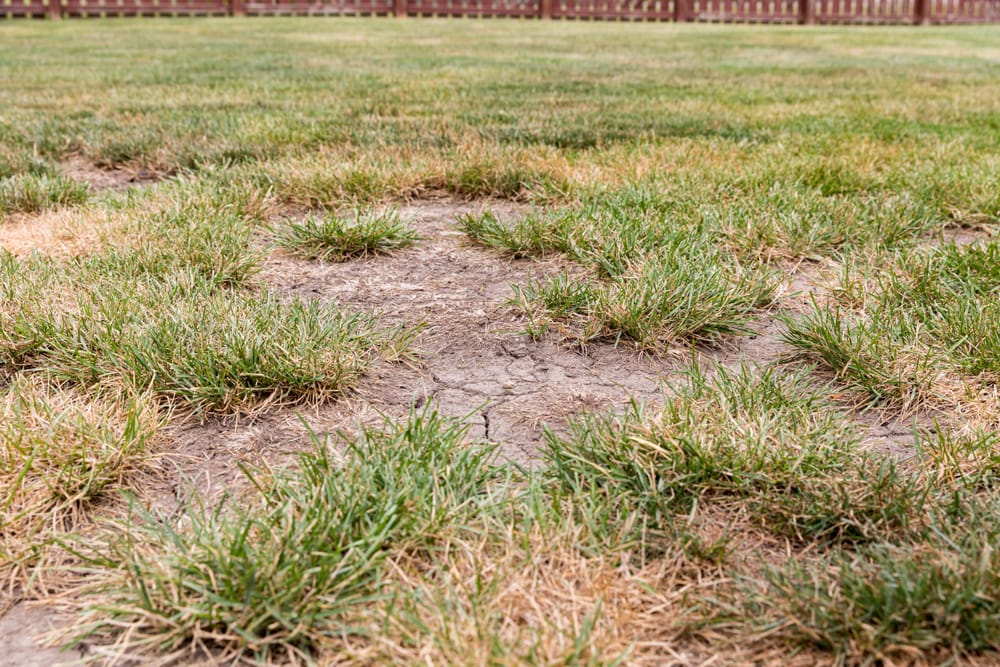
If your lawn is speckled with brown dry patches, no matter how much you water, dry hot spots could be to blame. A professional lawn care service that specializes in soil health and proper irrigation can help determine (and address) the root cause of the problem. If left unchecked these spots can certainly stress the surrounding grass, make the problem worse, and result in lasting damage. But there’s good news, as using the right approach can allow your lawn to make a full recovery.
Why Dry Hot Spots Are so Hard to Correct
One of the most common problems that lawn maintenance professionals are confronted with is what to do about dry spots in lawns. It’s not unusual to hear a customer describe a stubborn dry brown patch that they just can’t seem to correct. Fixing dry hot spots in a lawn can be challenging and often, homeowners will have tried many different methods over time to cure the spot, but without success.
Diagnosing Dry Hot Spots – What’s Really Stressing Your Lawn
Here’s the problem—sometimes it takes detective work to determine what’s causing the spot, and that’s where we come in. We’ve developed expert techniques to determine exactly what is causing those ugly dry patches in your lawn. Usually, these patches are a sign that your grass is under some serious stress. In some cases, these symptoms are a sign of an underlying issue that may require professional lawn disease treatment. If patches are relatively small and isolated, then the family dog may be the culprit, as the nitrogen in a dog’s urine is a notorious cause of dry patches.
Also, if your dry patches are more widespread, the problem may be excess nitrogen due to previously applied fertilizer. Improper application of fertilizer is a common cause of dry hot spots that an experienced lawn fertilization service can address, then correct before the damage spreads. Plus, when the lawn doesn’t receive enough water it just exacerbates the problem. The first thing we do is ensure your grass is getting the hydration it needs. Typically, this means watering to a soil depth of 3-4 inches per watering session. You will need to apply 1-1.5 inches of water per week during the summer. When our region is getting more rain, you won’t have to water as often, but be cautious during a drought.
In drought-type conditions you’ll have to be particularly vigilant about watering. We recommend early-morning watering to minimize evaporation and make the most efficient use of the water. If your lawn has dry patches because of nitrogen burn, then you can use a metal rake to lift some of the grass and inspect the roots.
It may be that the nitrogen has not burned the roots. In this case, the grass will not have to be replaced, and once it receives adequate hydration it will grow once more. The raked areas will need to be irrigated heavily to leach away the urine or fertilizer that is causing the dry patch.
You may need to completely or partially replace the turf, depending upon the extent of the damage. Then, we’ll design a custom fertilization schedule and make irrigation suggestions for your lawn so you can avoid similar problems in the future.
Let Green Top Lawn Care Fix Your Dry Hot Spots for Good
If you’re trying to decide what to do about dry hot spots in your lawn, then give us a call. We can help you solve this problem. With our ongoing care, your yard will soon be the envy of the neighborhood. Call (817) 684-4044 or request a free dry hot spot quote today.


